Why is Morocco Literally Obsessed with Cats?
If you’ve spent even five minutes in Morocco, you already know the deal: cats are everywhere.
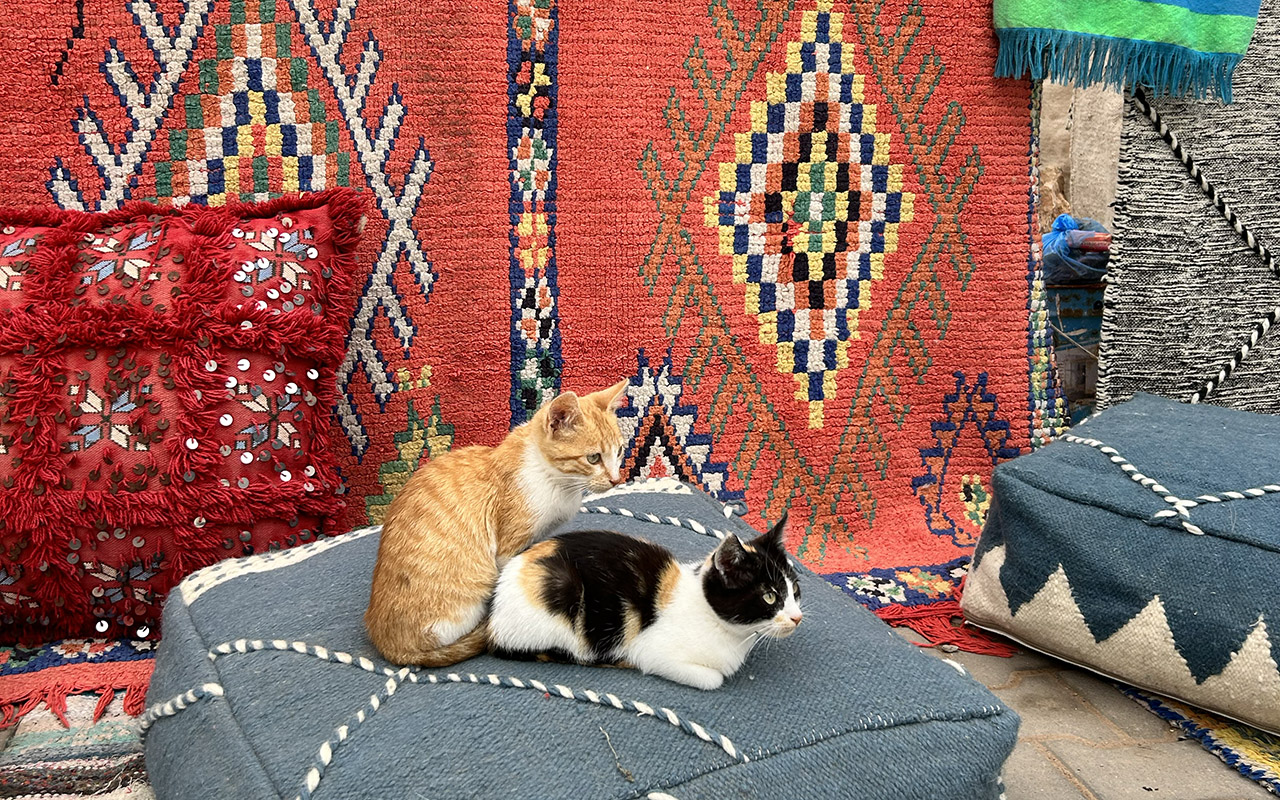
They’re on the motorbikes, they’re on the piles of carpets, and they’re definitely watching you eat your tagine. Honestly, sometimes it feels like we’re just guests in a country that actually belongs to the cats.
But why is it like this? Why aren’t there more dogs, and why is everyone so chill about kittens sleeping on their shop counters?
Here’s the lowdown on the Moroccan cat craze.
1. It’s a Religious Thing (The Prophet Loved Them)
Morocco is a Muslim country, and in Islam, cats are kind of a big deal. Unlike dogs, which are sometimes seen as “complicated” to keep indoors, cats are considered super clean.
There’s a famous story about the Prophet Muhammad cutting off his own sleeve just to avoid waking up his cat. Because of this, harming a cat is a huge “no-no” in Morocco. People treat them with a lot of respect because it’s part of their faith and culture to be kind to them.
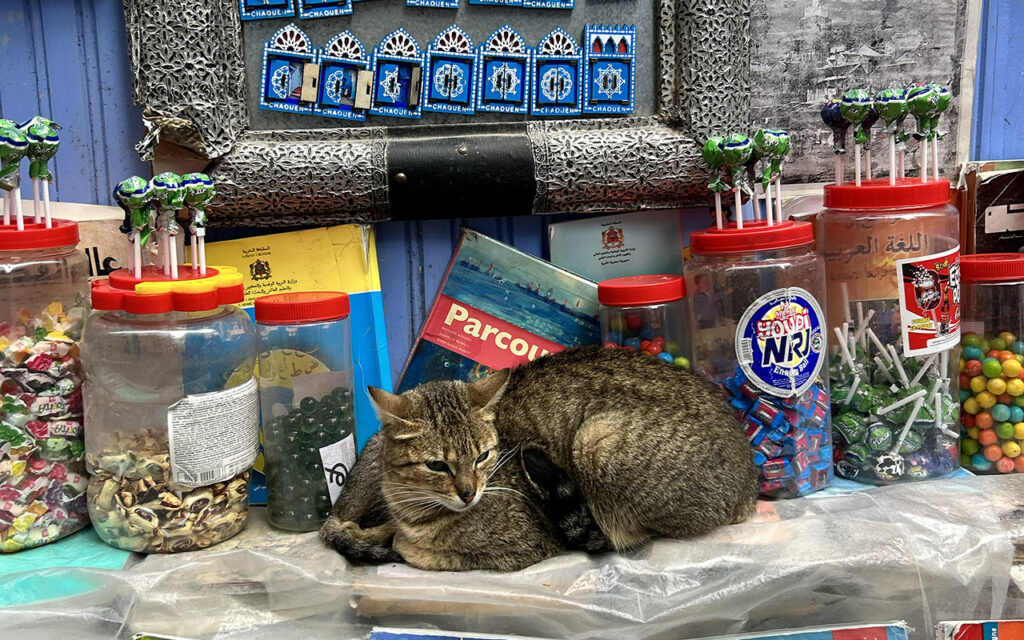
2. They’re the “Medina Security”
Back in the day (and even now), those ancient, narrow streets in the Medinas had a bit of a rodent problem. You’ve got grain, leather, and food everywhere – basically a buffet for rats.
Enter the cats. They are the natural pest control. Shop owners love having a “resident cat” because it keeps the mice away. It’s a fair trade: the cat gets a safe place to nap, and the shopkeeper doesn’t have holes in his spice bags.
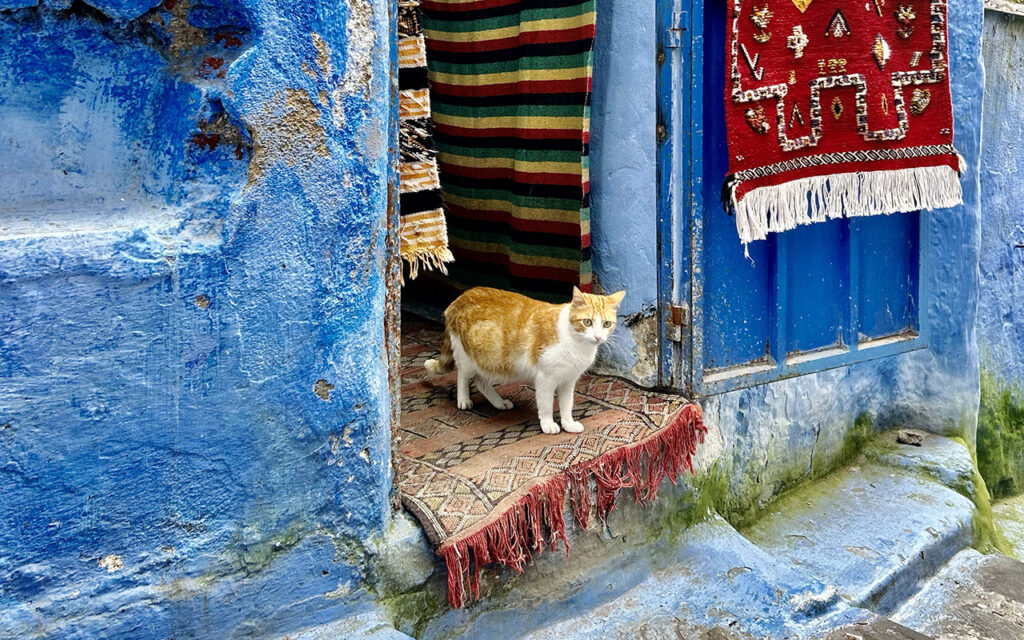
3. “Community Pets” vs. “Strays”
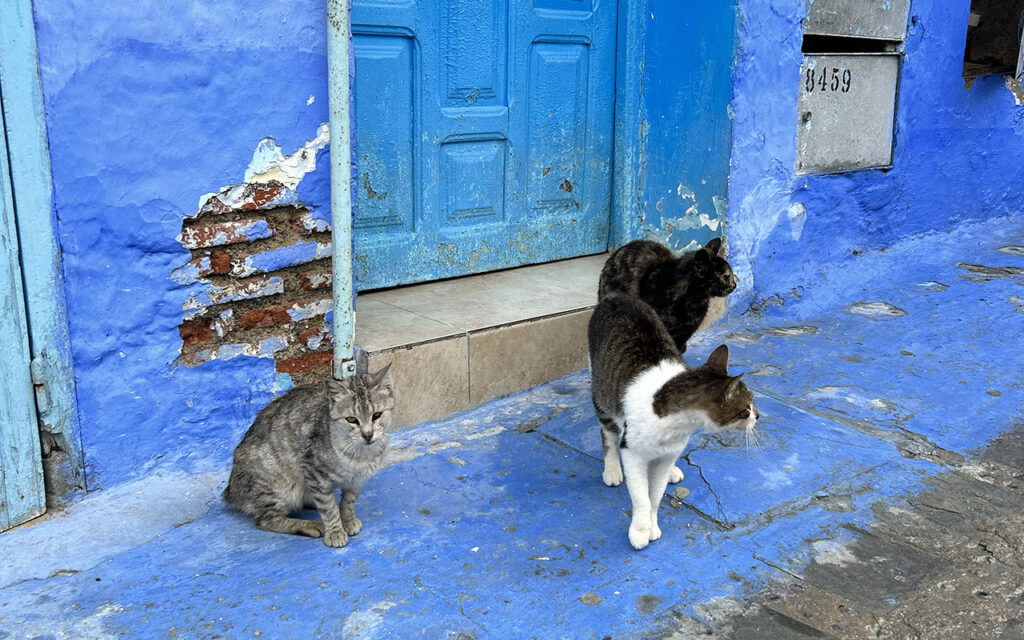
This is the part I love most. In the West, a cat without a home is a “stray.” In Morocco, they’re more like neighborhood roommates.
You’ll see:
- Fishmongers throwing the best scraps to the “local” ginger cat.
- Random bowls of water left out in the middle of a busy street.
- Cats looking incredibly well-fed and relaxed, even if they don’t have a sofa to sleep on.
They don’t belong to one person; they belong to the whole street.
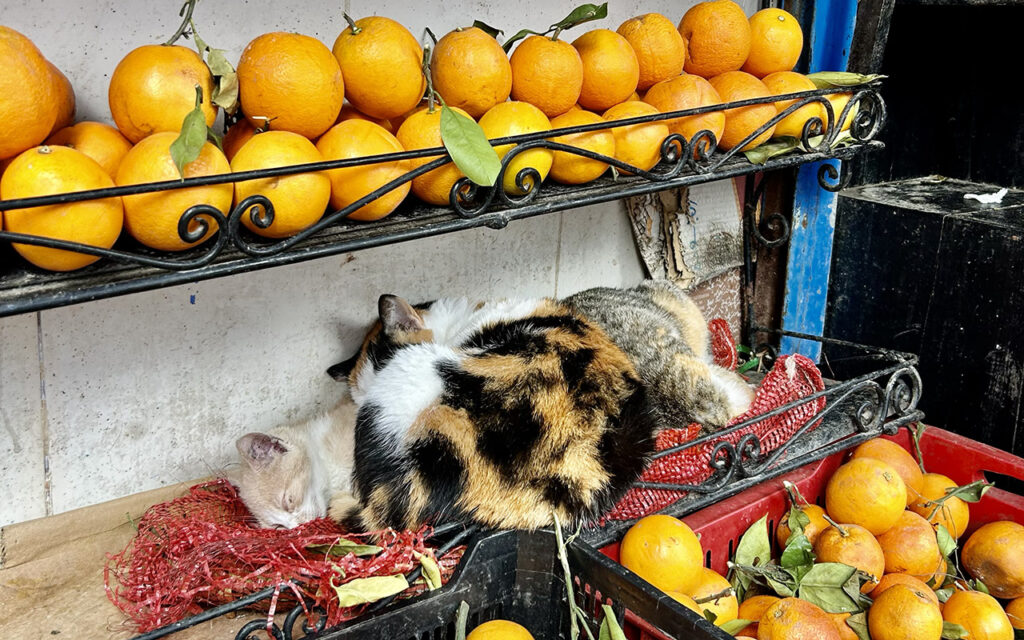
4. The “Blue Pearl” Models
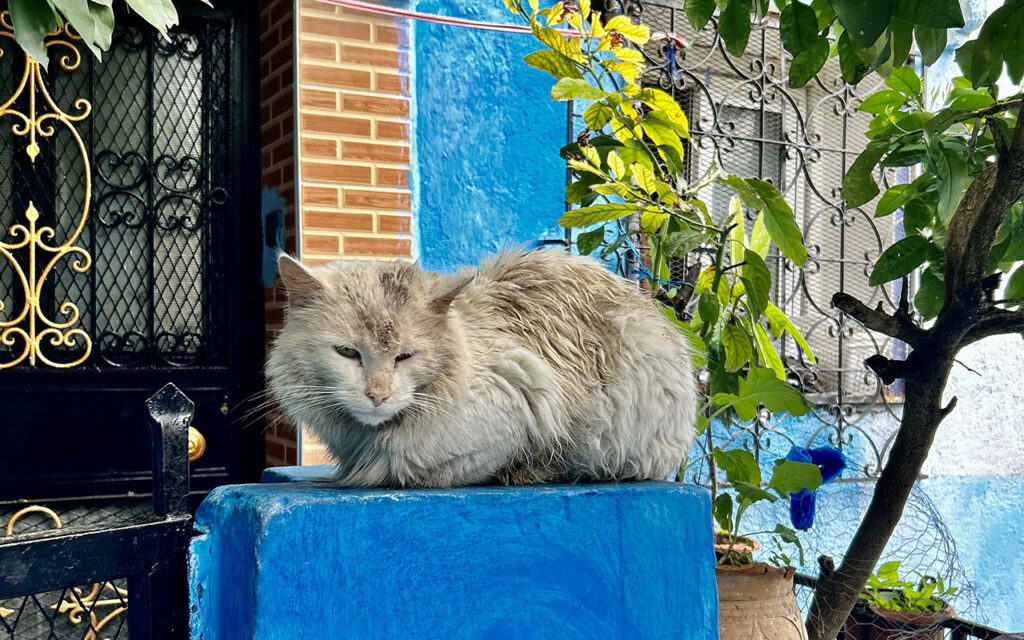
If you go to Chefchaouen, be prepared for your phone storage to die. The contrast of a cat sitting on those bright blue steps is just too good. These cats are basically professional models at this point – they know they look good, and they aren’t moving for anyone.
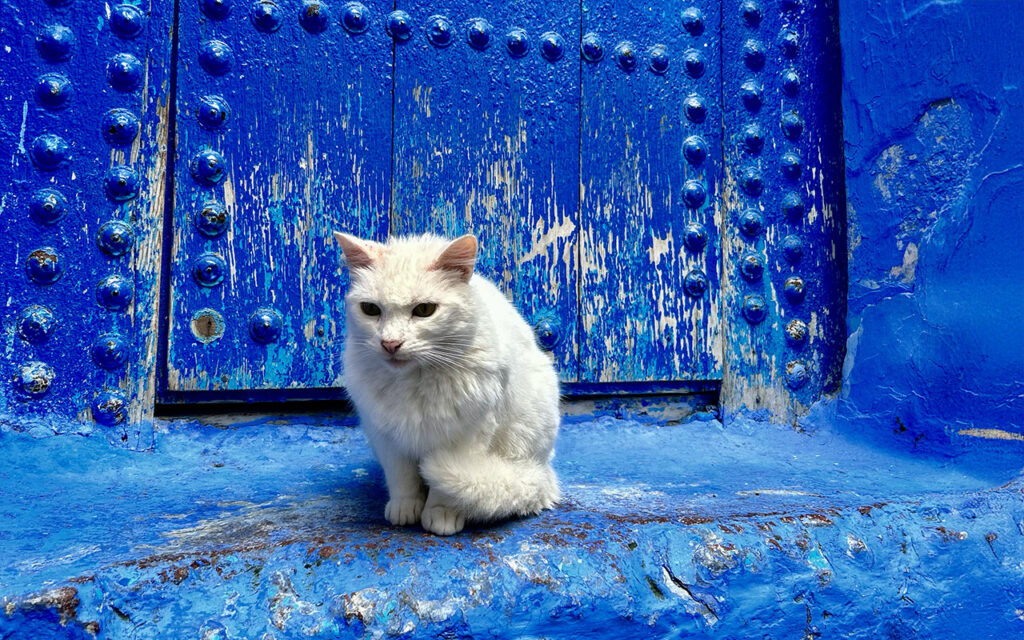
A Quick Reality Check
Look, it’s not always a fairytale. Being a street cat is still tough, and you will see some kitties that have had a rough time.
The good news? There are some awesome people and local organizations working on neutering and vet care to make sure the population stays healthy. If you’re visiting, maybe skip the fancy souvenir and leave a few Dirhams for a local animal charity instead.
My Final Take
After a while, you just get used to it. You’ll be walking through a market, trip over a kitten, and just say “Sorry, buddy” like it’s the most normal thing in the world.
Morocco wouldn’t be Morocco without them. They’re part of the vibe, the scenery, and the heart of the country. While most are friendly, it’s always smart to check the latest safety advice regarding street animals before you start petting every fluffball you see.
Have you been to Morocco? Did you end up with 500 cat photos like I did? Let me know!